ALL PRODUCTS IGSL INTERNATIONAL CERTIFIED


The Scientific Journey of Garnet and Garnet Stones: Types and the Truth Behind the Crystals
Garnet has attracted attention throughout history as both a stunning gemstone and an important industrial mineral. The term "garnet" does not actually refer to a single stone, but rather to a group of nesosilicate minerals with similar crystal structures ( Garnet - Wikipedia ). In this article, we will examine the chemical and physical properties of garnets, their formation processes, and types of garnet (especially almandine, pyrope, spessartine, grossular, andradite, and uvarovite) from a scientific perspective. We will also delve deeper into the world of red garnets (especially almandine and pyrope), also known as garnets, examining the facts and scientific explanations behind the crystals. Finally, we will examine how garnet colors are formed and the scientific validity of these stones' benefits , evaluating alternative claims in light of current research.
Chemical and Physical Properties of Garnet Stones
All members of the garnet group share similar crystal structures and physical properties, but their chemical compositions vary ( Garnet - Wikipedia ). Their general chemical formula is X₃Y₂(SiO₄)₃ , where the X position usually contains divalent cations (such as Mg²⁺, Fe²⁺, Mn²⁺, Ca²⁺) and the Y position contains trivalent cations (such as Al³⁺, Fe³⁺, Cr³⁺). All garnet minerals crystallize in the cubic (isometric) crystal system, typically forming well-formed crystals in the rhombic dodecahedron (12 sided) or trapezohedron (24 sided) shapes ( Garnet - Wikipedia ) .
The main physical properties of garnet stones are:
-
Hardness (Mohs scale) : It has a hardness between 6.5 and 7.5, which is at the level of quartz ( Garnet - Wikipedia ). This hardness allows garnet to be durable enough for daily use as jewelry and also allows it to be used as an industrial abrasive.
-
Density (Specific Gravity) : Varies between approximately 3.1 and 4.3 ( Garnet - Wikipedia ). This value varies in different types of garnet according to the elements they contain; for example, Andradite, which contains calcium and iron, generally has a higher density.
-
Color : Garnets can be found in almost any color . While the most common colors are shades of red, green, orange, yellow, brown, and even rare blue garnets have been observed ( Garnet - Wikipedia ). Blue garnet is the rarest variety and was first reported in the 1990s ( Garnet - Wikipedia ) .
-
Luster : Translucent or opaque specimens exhibit a resinous luster , while transparent gem-quality specimens exhibit a vitreous luster ( garnet - Wikipedia ). Well-polished garnet surfaces can sometimes have a luster reminiscent of a semi-diamond luster.
-
Crystal structure and fracture : Because they are isometric, garnets do not exhibit distinct cleavage ; when broken, they form conchoidal (concentric) fracture surfaces ( Garnet - Wikipedia ). They are optically monorefractive (isotropic), so they do not exhibit pleochroism (different colors in different directions) ( Garnet - Wikipedia ). Their refractive index is high (typically between 1.72 and 1.94) ( Garnet - Wikipedia ), which contributes to garnets' vibrant brilliance.
-
Magnetic Properties : Some types of garnet may exhibit a small magnetic attraction, depending on the amount of iron in their composition. Gemologists even test the magnetic susceptibility of different types of garnet using powerful magnets; for example, high-Mn Spessartine responds differently magnetically than high-Fe Almandine. This is a practical method for identifying garnet series ( Garnet - Wikipedia ) ( Garnet - Wikipedia ).
Besides these common physical properties, another characteristic that makes the garnet group unique is its range of stability . Garnet's crystal structure is stable even at high pressures and temperatures. Therefore, many garnet minerals form within metamorphic rocks deep within the Earth's crust and retain their original crystalline form even when exposed to the surface. Now, let's examine how garnets form in nature and their geological significance.
Formation of Garnet Stones and Geological Processes
Garnet minerals occur in a wide geological range and can be found in both metamorphic and igneous environments. Most commonly, garnets are a characteristic mineral of metamorphic rocks ( Garnet - Wikipedia ). For example, when clay-rich sedimentary rocks transform into metamorphic rocks like schist under high temperatures and pressures, garnet crystals like almandine often grow within them because of their abundant aluminum content. These reddish garnet crystals appear as large crystals called " porphyroblasts " within micaceous schists, giving the rock a mottled appearance.
Here are a few examples of garnet formation in metamorphic environments:
-
Medium- to high-grade metamorphism : Almandine is often found in moderately to highly metamorphosed rocks such as mica schist and gneiss, and occurs in association with minerals such as staurolite, kyanite, and andalusite ( Garnet - Wikipedia ). This association indicates that the rock has been subjected to certain temperature-pressure conditions (e.g., amphibolite facies ).
-
Skarn deposits : Mineral-rich formations called skarns form as a result of contact metamorphism of calcium-rich rocks such as limestone through magmatic intrusions. Calcium garnets (Grossular or Andradite) are frequently observed in skarns ( Garnet - Wikipedia ) . For example, iron-rich Andradite (in the form of yellow-green Topazolite or the green Demantoid variety) can occur in skarns and marbles.
-
Low-grade metamorphism : Some types of garnet, such as spessartine, can occur even in relatively low-grade metamorphic environments (e.g., phyllites) ( Garnet - Wikipedia ). Although this is rare, small garnet crystals can develop at low temperature when certain chemical compositions are met.
Garnet formation in magmatic and deep-source environments requires more specific conditions:
-
Pyrope from the Mantle : Pyrope (Mg-aluminum garnet) is most abundant in peridotite rocks of upper mantle origin. It is particularly attractive to diamond prospectors because pyrope crystals can be transported to the surface by volcanic kimberlite pipes and can indicate diamond formation ( Garnet - Wikipedia ) . For this reason, pyrope is called an indicator mineral in geology—its presence can be a precursor to abyssal rocks formed under high pressure, and possibly diamonds.
-
Granitic Pegmatites and Rhyolites : Spessartine (Mn-aluminum garnet) can develop as bright orange or reddish crystals in granite pegmatites and silica-rich igneous rocks such as rhyolite ( Garnet - Wikipedia ). Vibrant orange spessartine, called " mandarin garnet ," has been formed, particularly in granite pegmatites in Namibia and Brazil. Likewise, some rhyolite lavas have been reported to grow violet-red spessartine crystals as they cool ( Garnet - Wikipedia ).
-
Ultramafic Environments and Uvarovite : Uvarovite (Ca-chrome garnet) is a rare, completely emerald-green garnet. It typically occurs as small, bright green crystals in ultramafic rocks, particularly chromite-bearing peridotites and serpentinites ( Garnet - Wikipedia ). Chromite deposits in the Ural Mountains of Russia are famous for the microscopic uvarovite crystals that fill cracks in the rocks. These small but dense green crystals are not usually cut into jewelry because they are not large enough, but they are rare specimens in mineralogy collections.
The geological importance of garnets is not limited to their role as indicators of the rock type in which they are found. They play a critical role as indicators of metamorphism (index minerals) . For example, the appearance of garnet in schists in a region indicates that the metamorphic grade of that rock has exceeded a certain threshold (e.g., a transition from greenschist to amphibolite facies). Geologists trace the zones where garnet first appears and disappears to map isograds (temperature-pressure conditions) in metamorphic terrains ( Garnet - Wikipedia ).
Furthermore, garnet crystals can act as geological time capsules . As a garnet crystal grows from its core to its rim, it can record zones of distinct composition due to changing conditions. Modern research uses electron microprobes to analyze the elemental distribution within garnet to determine the temperatures and pressures the crystal experienced during growth. This allows geothermobarometry to reveal the temperature-pressure paths (PT paths) followed by metamorphic rocks ( Garnet - Wikipedia ). For example, if the center of a garnet formed at a lower temperature and the edges at a higher temperature, the rock has been heated over time, and these growth zones represent the gradual increase in metamorphism ( Garnet - Wikipedia ).
Garnet also has another scientific importance in geochronology. Recently developed methods have been used for uranium-lead (U-Pb) isotope dating of some large garnet crystals ( Garnet - Wikipedia ). Garnet, particularly those grown under metamorphic conditions, can incorporate uranium isotopes and precipitate without producing lead products; this allows the absolute age of the metamorphic event to be determined by measuring the garnet's crystallization age. Similarly, measurements of helium in garnet using the (U-Th)/He method can reveal the garnet's cooling age (i.e., the timing of the metamorphic rock's emergence to the surface) ( Garnet - Wikipedia ).
In summary, garnets are, from a geological perspective, both a thermometer-barometer that records metamorphic conditions and a clock that can determine the timing of geological processes. These unique properties make them valuable not only for their beauty but also for scientific purposes.
Basic Types of Garnet Stones (Pyralspit and Ugrandit Series)
Garnet group minerals are classified into two main series according to their chemical composition:
-
Pyralspit Series : Its name comes from the abbreviation of the words Pyrope-Almandine-Spessartine, and their common feature is that they contain Aluminum (Al³⁺) in the Y position. In this series, the X position is usually occupied by Mg²⁺, Fe²⁺, or Mn²⁺ ( Garnet - Wikipedia ). Pyrope, Almandine, and Spessartine are included in this group.
-
Ugrandite Series : It takes its name from the combination of the words Uvarovit-Grossular-Andradite. The common feature of this series is the presence of Calcium (Ca²⁺) in the X position, and Cr³⁺, Al³⁺, or Fe³⁺ in the Y position. ( Garnet - Wikipedia ). Uvarovit, Grossular, and Andradite are in this group.
Now let's discuss each of the garnet types under separate subheadings, with their chemical formulas, colors and properties.
Almandine (Iron-Aluminum Garnet)
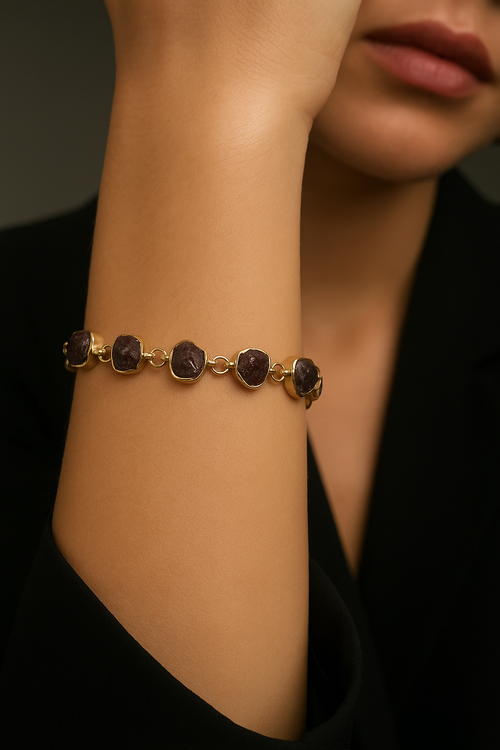
Almandine is a type of iron-aluminum garnet with the chemical formula Fe₃Al₂(SiO₄)₃ ( Garnet - Wikipedia ). It is one of the most common and well-known members of the garnet family. It is typically deep red, burgundy, or purplish red in color. Transparent, gem-quality almandine has historically been referred to as " garnet " or "carbuncle" (meaning "burning coal") ( Garnet - Wikipedia ). In the Middle Ages, the term "carbuncle" was originally used to describe any red gemstone, including ruby; however, in modern gemology, it is used specifically for almandine garnet.
Properties and formation of almandine:
-
Color and Appearance : Due to its high iron content, almandine is often blood-red. The highest quality specimens are deep red and translucent, with a " pomegranate seed " sheen. This red color, caused by Fe²⁺ ions, results from the absorption of green light and the transmission of red light. The high iron content in some almandines can darken the color significantly, causing the stone to become opaque.
-
Composition and Series : Almandine is the Fe-end member of the pyralspit series. It forms a solid solubility series with pyrope, meaning the ratio of Fe to Mg in natural garnets can vary. For example, the pink-purple garnet called rhodolite contains approximately 70% pyrope (Mg) and 30% almandine (Fe), making it lighter in color.
-
Crystal Habitus : Typically found as well-formed dodecahedral crystals. It develops as porphyroblasts in metamorphic rocks, particularly micaceous schists ( Garnet - Wikipedia ). Its occurrence in these rocks, along with index minerals such as staurolite and kyanite, indicates that temperatures of approximately 500-600°C were reached.
-
Specific Examples : Almandine sometimes exhibits the " star garnet " effect when it contains acicular rutile inclusions. Under light, four- or six-pointed star patterns appear on the stone's surface. This phenomenon is accentuated when the inclusions are cut into a cabochon, as is the case with star rubies and sapphires. The star almandine garnets of Idaho, USA, are world-renowned and are the official state gemstone of Idaho ( Garnet - Wikipedia ).
Almandine is the most abundant garnet on Earth, and therefore its economic value is lower than some rarer garnets. However, beautifully colored and transparent almandine has been used in jewelry for centuries, appearing in a wide variety of artifacts, from royal crowns to antique jewelry. Today, it is frequently used as a garnet in jewelry and ornamental items such as rings, necklaces, and rosaries.
Pyrope (Magnesium-Aluminum Garnet)
Pyrope is a magnesium-aluminum garnet with the formula Mg₃Al₂(SiO₄)₃ ( Garnet - Wikipedia ). Named after the Greek word "pyrōpós" (like fire), pyrope is known for its fiery red color. While pure pyrope can be chemically colorless, natural pyrope often appears red or deep red because it often contains some iron. It has sometimes been nicknamed "Cape rubies" or "Bohemian rubies" because it can be confused with ruby ( Garnet - Wikipedia ).
Notable features of Pirop:
-
Color : The typical pyrope color is a deep red with a slight brown tint. Some pyrope specimens containing traces of chromium may be a more vibrant red, while very dark specimens may appear almost black ( Garnet - Wikipedia ). Pyrope may exhibit slightly lighter red tones than almandine when low in iron.
-
Geographic Sources and Formation : Pyrope is most famously found in kimberlite pipes. Pyrope crystals, broken off from peridotite rocks in the mantle, are brought to the surface by volcanic eruptions along with diamonds. Abundant pyrope crystals are found in diamond deposits such as those in South Africa (Kimberley region) and Russia (Yakutia). Rich red pyrope grains have also been found in volcanic tuffs in Arizona (USA) and the Czech Republic (formerly Bohemia) and were historically used in jewelry (known as Bohemian garnets).
-
Rhodolite : Rhodolite is a pink-purple variety intermediate between pyrope and almandine, with a composition of 70% pyrope and 30% almandine. ( Garnet - Wikipedia ) Rhodolite takes its name from the Greek word rhodon, meaning "rose stone," because of its rose-pink hue. Discovered in North Carolina, USA, in the 19th century, rhodolite garnet is today both a popular gemstone and a fine example of the Pyrope-Almandine series.
-
Indicator Mineral : Pyrope is considered a high-pressure indicator mineral in geology ( Garnet - Wikipedia ). So, if you find pyrope grains in sedimentary sandstone or stream gravel, they likely originated in high-pressure rocks such as kimberlite or eclogite. Therefore, exploration geologists investigate the diamond potential of heavy mineral concentrates when they encounter pyrope grains during field exploration.
Pyrope garnets have been popular throughout history. In medieval Europe, red pyrope stones originating from Asia were known as "Karunkel" and were a valuable ornamental stone for the nobility. Jewelry made from red pyrope garnets, particularly those mined in the Czech Republic, has gained fame under the Bohemian Garnet brand. Pyrope's warm red color is seen in the jewelry world as a symbol of passion and energy.
Spessartine (Manganese-Aluminum Garnet)
Spessartine (or Spessartite) is a variety of manganese-aluminum garnet with the formula Mn₃Al₂(SiO₄)₃ ( Garnet - Wikipedia ). Named after the Spessart region in Germany, this garnet is particularly known for its vibrant orange color. Spessartine is one of the brightest and warmest members of the garnet family.
Distinctive aspects of Spessartin:
-
Color Range : Its most common color is tangerine orange , which is why it is also known as " mandarin garnet ." Spessartine acquires its unique bright orange hues because the electron transitions of manganese(II) ions absorb ultraviolet and blue light, transmitting orange-red wavelengths. While some spessartines can turn reddish brown when they contain more iron, examples (e.g., from Madagascar) with a light orange-yellow color with manganese content close to that of bile have also been found ( Garnet - Wikipedia ).
-
Transparency and Size : Spessartine generally forms smaller crystals than other garnets, but high-quality clear orange spessartines are highly prized in the gemstone market. Discovered in Namibia in the 1990s, bright orange spessartine crystals caused a sensation in the jewelry world, increasing demand for mandarin garnets.
-
Environment of Formation : Its most common occurrences are granitic pegmatites and skarn deposits ( Garnet - Wikipedia ). Spessartine may occur as small, uniform, polyhedral crystals in the terminally crystallized cavities of granitic pegmatites. Spessartine also occurs in some hydrothermal veins and in low-grade metamorphic phyllites. Well-known sources include Namibia (orange), Brazil (orange-red), China (reddish), and some US states (e.g., Maine – violet-red spessartines) ( Garnet - Wikipedia ).
-
Distinguishing Characteristics : Spessartine is easily distinguished from other garnets by its intense orange color. Some orange spessartines have also been reported to exhibit a faint yellowish fluorescence under UV light, a characteristic of their Mn²⁺ ions.
Spessartine is a relatively recent gemstone discovered in jewelry. Its brilliant color has made it popular with modern jewelry designers. A large, clear mandarin garnet is prized as a collectible gemstone due to its rarity and striking color.
Grossular (Calcium-Aluminum Garnet)
Grossular is a type of calcium-aluminum garnet with the formula Ca₃Al₂(SiO₄)₃ ( Garnet - Wikipedia ). Its name comes from the Latin word "grossularia" (gooseberry), referring to the gooseberry-like color of the green grossular garnets found in Siberia ( Garnet - Wikipedia ). The grossular family is one of the most color-diverse garnets and includes several important subvarieties.
Characteristics and subtypes of Grossular:
-
Color Variety : Grossular can be colorless in its pure form, but because its purity is rare in nature, it takes on a wide variety of colors. Depending on the trace elements it contains, grossulars can be found in green, yellow, orange, brown, pink, and even, rarely, red ( Garnet - Wikipedia ). For example:
-
Tsavorite : An intense green grossular variety containing vanadium and sometimes chromium. It was discovered near Tsavo National Park in Tanzania in 1967. It is highly prized for its emerald green color and is sometimes called the "African emerald" because of its name ( Garnet - Wikipedia ) ( Garnet - Wikipedia ).
-
Hessonite : A grossular variety with colors ranging from honey yellow to cinnamon brown. Traces of iron within it give it its typical " cinnamon stone " color. Its slightly lower hardness (around 6.5) gives it its name, derived from the Greek word "hesson" (lower, weaker). ( Garnet - Wikipedia ) Sri Lanka and India are famous for their hessonite garnets.
-
Colorless Grossular (Leuco-garnet) : This rare, completely transparent, and colorless grossular form is characterized by its high purity of Al and Ca. It has collector value but is rarely used in jewelry.
-
Rosolite : Bright pink grossular crystals. Commonly found in some marble deposits in Mexico.
-
-
Environment of Formation : Grossular develops predominantly in limestone-derived rocks (skarns) formed by contact metamorphism ( Garnet - Wikipedia ). Because a calcium-rich environment is required, calcschist, marble, and skarn are typical locations for grossular. For example, the Asbestos region in Quebec, Canada, is known for its green grossular garnets; and orange grossulars are found in the skarns of the Vesuvian region in Italy.
-
Crystal Structure : Grossular generally forms well-formed dodecahedral crystals. Clear crystals are sometimes quite large for collectors. However, valuable varieties such as tsavorite often develop in veins as small but intensely colored crystals.
-
History and Culture : Grossular garnet is known as "Gomed" in Vedic astrology and is among the Navaratna (nine sacred stones) ( Garnet - Wikipedia ). Hessonite (honey-colored grossular), in particular, is worn by astrologers because it corresponds to the stone Rahu. This use is cultural and lacks scientific basis, but it exemplifies the historical value of grossular.
Grossular garnets have gained a significant place in the jewelry world, particularly thanks to tsavorite. Tsavorite, with its emerald-like color but higher luster and generally lower price, has become a popular alternative among green gemstones. Varieties like hessonite also enjoy unique hues, attracting the attention of jewelry enthusiasts.
Andradite (Calcium-Iron Garnet)
Andradite is a type of calcium-iron garnet with the formula Ca₃Fe₂(SiO₄)₃ ( Garnet - Wikipedia ). Named after Brazilian mineralogist José Bonifácio de Andrade e Silva, andradite is one of the members of the garnet family with the highest dispersion index (brightest luster). It can occur in a wide range of colors and is classified into three major varieties:
-
Demantoid – Vivid green andradite.
-
Topazolite – Yellow-green andradite.
-
Melanite – Titanium-bearing andradite in black.
Andradit's main features:
-
Color and Varieties : Andradite can be red, yellow, brown, green or black depending on the iron(III) and trace elements in its composition ( Garnet - Wikipedia ).
-
Demantoid , the name, means "diamond-like" because it has a high refractive index and dispersion. It has an emerald green color due to the presence of traces of chromium. The most famous sources of demantoid worldwide are Russia (Urals) and Namibia. Demantoid generally yields small, faceted-cut stones, but its "fire" (light-resolving ability) makes it highly valuable. It often contains golden-yellow "horsetail" inclusions (fibrous chrysotile asbestos); these inclusions are a distinctive feature of Russian demantoids.
-
Topazolite is yellow to yellow-green. It takes its name from its topaz-like color. It is typically found as small, transparent, faceted crystals. The Val d'Ala region of Italy was known for its topazolite.
-
Melanite is an opaque black, titanium-rich variety of andradite ( Garnet - Wikipedia ). It is notable for its intense black color and glossy, glassy surface. Melanite typically crystallizes in the cavities of volcanic rocks; the Latium region of Italy, near Rome, is an ancient source of melanite.
-
-
Occurrence : Andradite occurs most frequently in skarn and contact metamorphic environments ( Garnet - Wikipedia ). For example, when a calcareous marble layer is intrusively heated by a granitic magma, andradite garnets can form by the action of calcium and iron. Andradite is also found in silica-poor igneous rocks such as syenite and in their altered forms (e.g., associated with serpentinites) ( Garnet - Wikipedia ). Demantoid is generally formed in cracks in chromium-bearing serpentinized ultramafic rocks (such as the Urals).
-
Optical Properties : Andradite has the highest brilliance and fire of all garnets. The dispersion of demantoid (0.057) is even higher than that of diamonds, so a small demantoid can, when properly cut, emit color almost like a diamond. This optical superiority gives andradite a special place in the jewelry market.
Perhaps the most interesting aspect of andradite garnet is that the demantoid variety was highly sought after during the reign of the Russian Tsars. Demantoids, which originated in Russia in the late 19th century, were used in the works of jewelers such as Fabergé, but were long forgotten once the source was depleted. The stone returned to the spotlight with the discovery of new demantoid deposits in Namibia in the 1990s. Today, high-quality demantoids remain a sought-after gemstone among jewelry collectors.
Uvarovit (Calcium-Chromium Garnet)
Uvarovite is a type of calcium-chromium garnet with the formula Ca₃Cr₂(SiO₄)₃ ( Garnet - Wikipedia ). It is one of the rarest primary members of the garnet group and the only garnet that occurs in a permanent green color. Named after Russian statesman Count Sergey Uvarov, uvarovite's emerald green hue makes it strikingly beautiful even in small crystals.
Distinctive features of Uvarovit:
-
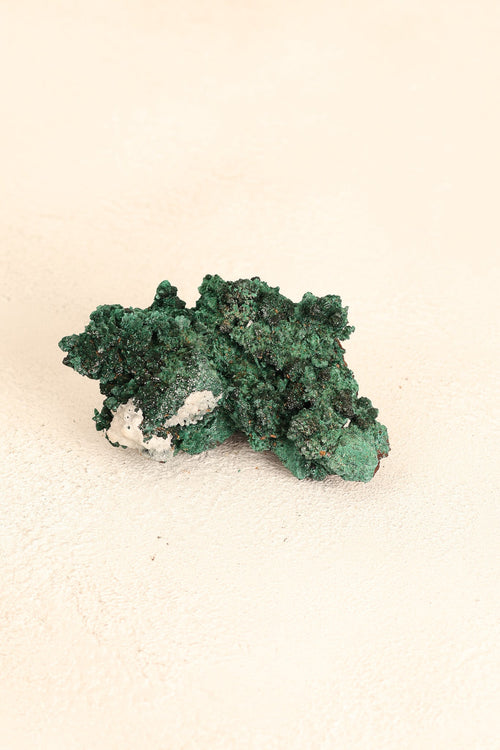
Color : Vivid emerald green is the distinctive color of uvarovite garnet. This color is due to the Cr³⁺ (chromium) ions in its structure. The same coloring effect of chromium is also seen in other gemstones such as emerald (beryl) and green jadeite. Uvarovite is generally opaque or translucent; because the crystals are so small, cut and faceted examples are extremely rare.
-
Crystal Size and Occurrence : Uvarovite almost always occurs as small crystals or crust-like, drusi (crystal clusters). Typically, crystals a few millimeters or smaller cover rock surfaces like a bright green "carpet of jewels." Such specimens are valuable as aesthetic mineral specimens. Larger, faceted uvarovite crystals are virtually nonexistent, making uvarovite rarely used as a gem.
-
Geological Setting : Uvarovite is strongly associated with ultramafic rocks. It develops particularly around chromium-rich chromite veins ( Garnet - Wikipedia ). For example, dense uvarovite druses have formed in fractures around chromite ore at the Saranovskiy mine in the Ural Mountains. Similarly, uvarovite is found within serpentinite in environments such as the Outokumpu mine in Finland ( Garnet - Wikipedia ). Uvarovite crystals can also occur in some marbles and skarns if sufficient chromium is present.
-
Historical Note : Uvarovite was introduced to the mineralogical community upon its discovery in 1832 and named in honor of Uvarov, then president of the Russian Academy of Sciences. Although not widely used due to its rarity, it was prized as the " Uvarovite emerald " for its bright green color. Some collectors used small crystalline specimens as jewelry, setting them like mosaics on silver backgrounds—a rare application for uvarovite.
In short, uvarovite garnet is a rare and collectible gemstone. Although not gem-sized, it holds a place in scientific displays and collections as a testament to how nature can create vibrant colors.
Garnet (Red Garnets) and Their Historical Significance
The term " garnet " (garnet) came into our language from Persian and was traditionally used to describe red gemstones. In Ottoman and Persian sources, the term "garnet" was often used to refer to the red almandine or pyrope, which we know today as garnet . Therefore, the term "garnet" became a common name, particularly for red garnets (almandine, pyrope, and their mixtures).
Highlights and stories of garnets:
-
Historical Use : Garnet (red garnet) has been used in jewelry and ornaments since antiquity. Garnet jewelry was found in the tombs of the Pharaohs in ancient Egypt; in ancient Rome, Pliny praised the value of garnet, which he called "carbunculus" (eye stone). ( What Is An Almandine Garnet? - Nazar's & Co. Jewelers ) ( What Is An Almandine Garnet? - Nazar's & Co. Jewelers ) In the Middle Ages, Crusaders brought these red stones from the East to Europe, and garnet crosses and cups appeared in church treasuries. In Ottoman culture, garnet also appears in important rings and dagger ornaments.
-
Mythology and Legends : Garnet, with its bright red color, is often associated with blood, passion, and protection. Legends describe garnets as giving courage to their wearers, healing wounds, and even emitting light at night. Indeed, the legend of Noah's Ark features a story of a large garnet providing light so the ark could navigate in the dark. While such legends lack scientific basis, they demonstrate the powerful influence garnets have on humanity.
-
Color and Symbolism : The color of garnet can literally be described as "pomegranate red" (from the Latin granatus, which is the source of the name garnet) ( Garnet - Wikipedia ). This intense red color has been seen as a symbol of vitality and passion. Warriors believed that wearing garnet in their armor would bring them strength and victory, and lovers gifted garnet jewelry as a symbol of fidelity.
-
Almandine & Pyrope Blends (Rhodolite) : The two primary components that come to mind when talking about garnet are almandine and pyrope. These two species often occur together in nature, forming mixed crystals. Rhodolite is a prime example of this blend – its rose-pink color comes from the combination of pyrope's fiery red and almandine's purplish hues ( Garnet - Wikipedia ). When rhodolite was introduced to the market in the early 20th century, it was nicknamed "garnet ruby" and offered as a cheap alternative to real ruby. Today, it is considered a valuable garnet variety in its own right.
-
As a Moonstone and Birthstone : Garnet is considered the birthstone for January in many cultures. Astrologically, it is considered the birthstone for Aquarius and Capricorn ( Garnet - Wikipedia ). These beliefs tend to be more traditional and cultural than scientific. However, this has increased the garnet's popularity and made it a popular choice as a gift.
In conclusion, garnet is more than just a mineral; it carries a cultural motif and symbolic value that has left its mark on many periods of human history. Our scientific understanding today is that garnets are actually garnet minerals with a specific chemistry, deriving their striking red color from their elemental composition. However, this knowledge has not diminished garnet's appeal; on the contrary, both its historical heritage and its scientific foundation have made it even more intriguing.
Colors of Garnet Stones: Scientific Formation Mechanisms
The striking colors of garnet stones are a result of the chromophore elements (color-imparting ions) they contain and, sometimes, the interactions between these ions. The characteristic color of each type of garnet depends on the interaction of electrons from a particular element in its crystal structure with light. Here are the scientific facts behind garnet colors:
-
Red (Almandine & Pyrope) : The red hues of almandine and pyrope garnets are primarily due to their iron(II) (Fe²⁺) ions. Fe²⁺, in its position within the garnet's crystal lattice, absorbs light of specific wavelengths. The resulting light appears red-dominated, particularly due to absorption in the green region. Almandine often contains some Fe³⁺ ; charge transfer between Fe²⁺ and Fe³⁺ creates a broad absorption band, enhancing the deep, dark red color. Consequently, an almandine garnet derives its blood-red color from these unique electronic transitions of iron ( Garnet - Wikipedia ).
-
Orange & Yellow (Spessartine and Grossular) : The orange color of spessartine garnet is due to its high manganese(II) (Mn²⁺) content. The Mn²⁺ ions absorb violet and blue wavelengths, leaving orange-red hues. Similarly, some orange or yellowish varieties of grossular garnet (e.g., hessonite) contain small amounts of iron(III) (Fe³⁺) ; Fe³⁺ absorbs ultraviolet and blue light, causing the stone to appear yellow-orange. Hessonite's cinnamon color results from the partial substitution of Fe³⁺ for Al ( Garnet - Wikipedia ).
-
Green (Uvarovite, Demantoid, Tsavorite) : In the garnet group, the primary culprits behind the green color are chromium(III) (Cr³⁺) and, to a lesser extent, vanadium(III) (V³⁺) ions. Because uvarovite is a pure Ca-Cr garnet, it is always emerald green; the Cr³⁺ ions in its structure absorb red light and transmit green light, giving it its unique green color ( Garnet - Wikipedia ). Tsavorite (green grossular) and Demantoid (green andradite), on the other hand, have green hues due to their trace chromium and vanadium content. Vanadium plays a particularly important role in tsavorite; this element can even cause color changes depending on lighting conditions, as seen in alexandrite (chrysoberyl).
-
Color-Changing Blue Garnet : Discovered in Madagascar in the 1990s and subsequently found in other regions, a rare variety of garnet appears blue-green in daylight and purple in artificial light ( Garnet - Wikipedia ). This extraordinary " color-changing garnet " is composed of pyrope-spessartine and contains approximately 1% vanadium ( Garnet - Wikipedia ). Vanadium, like alexandrite, achieves this color change by absorbing different wavelengths of light in different light sources. This type of garnet, considered the rarest, appears slightly bluish (rarely pure blue) in daylight, and has attracted considerable scientific interest.
-
Brown and Black : Some garnets (such as highly ferrous almandine or titanium melanite andradite) are so dark they appear almost black. Brown hues are generally associated with a combination of Fe²⁺ and Fe³⁺ ; broad-band absorption partially absorbs the entire visible light spectrum, giving a brown-black appearance. Melanite andradite, however, becomes opaque black due to the addition of titanium ( Garnet - Wikipedia ). In this state, since light is no longer transmitted, it is notable for its surface sheen (a glazed black) rather than its color.
Thanks to scientific analyses , the origin of garnet colors has been understood in detail. For example, the optical absorption spectrum of a garnet can be measured with a spectrophotometer to determine which chromophores are present. Studies have shown that the Fe²⁺/Fe³⁺ ratio directly affects the depth of red garnet color, while the presence of Cr³⁺ creates a green color with sharp absorption lines in the spectrum ( Garnet - Wikipedia ) ( Optical absorption spectra of Fe2+ and Fe3+ in garnets - Persée ). Mossbauer spectroscopy was also used to examine the intervalantenna charge transfer bands between Fe²⁺ and Fe³⁺ in garnets, confirming that the red color of almandine-like stones stems from a strong broad band related to this phenomenon ( Optical absorption study of natural garnets of almandine-skiagite... ).
In short, the captivating color palette of garnets is the optical result of subtle variations in their cation composition. Nature has crafted an artistic combination of the elements of the periodic table into these crystals. By understanding the truths behind these colors, we can decipher the chemical signature of each garnet species.
Benefits and Uses of Garnet Stones (Scientific Facts)
Garnet stones, in addition to their aesthetic beauty, also benefit humanity in a variety of practical applications. In this section, we will examine the uses of garnet in jewelry, industry, and technology , and the scientific basis behind these uses. We will also address some common health claims about garnet and evaluate them from a scientific perspective.
Jewelry and Collectibles
-
Its Use as a Precious Stone : Garnets have been valued as jewelry for thousands of years. Various garnet species, including almandine, pyrope, demantoid, and tsavorite, feature in jewelry with their diverse colors. For example, red garnet garnet rings, green demantoid necklaces, and orange spessartine earrings are both eye-catching and offer affordable alternatives to more expensive gemstones like diamonds and emeralds. Garnet's hardness and durability (around 7 on the Mohs scale) make it suitable for everyday jewelry use; it doesn't scratch or break easily ( What Is An Almandine Garnet? - Nazar's & Co. Jewelers ). Therefore, it can be safely used even in jewelry that is worn regularly, such as engagement rings and pendants.
-
Birthstone and Astrological Significance : As mentioned above, garnet is considered the birthstone for January and the lucky stone for certain zodiac signs. These beliefs have increased the popularity of garnet jewelry for gift-giving and as a personal talisman. While choosing a gemstone based on a person's birth month has no scientific basis, cultural traditions contribute to garnet's commercial value. In the European and American jewelry markets, garnet consistently holds a place among birthstones for January.
-
Collecting and Investment : Garnet specimens of rare color and quality are highly prized by collectors. For example, a flawless demantoid of 10+ carats or a large, intensely colored tsavorite garnet can fetch high prices at auction. Due to their limited availability and demand, such stones are also often held as investments . The factors that determine the value of garnets are color saturation, clarity, size, and cut quality—just like other precious stones.
Industrial and Scientific Applications
-
Abrasive Material : Garnet grains are widely used as abrasives in industry due to their high hardness. Garnet grains play a significant role in sandblasting and waterjet cutting technology ( Garnet - Wikipedia ). Garnet is preferred because it is safer than silica sand (no risk of silicosis) and more environmentally friendly, and because the grains can be reused many times without breaking. In waterjet cutting, fine garnet grains mixed with water can precisely cut metal or stone plates with a high-pressure water jet ( Garnet - Wikipedia ) ( Garnet - Wikipedia ). With this method, materials such as steel, glass, or ceramics are cut to the desired shapes using garnet abrasives. Garnet particle sizes are selected according to their intended use: grains above 60 mesh (~250 μm) are ideal for sandblasting, 60–200 mesh for waterjet cutting, and <200 mesh for glass polishing and buffing ( Garnet - Wikipedia ).
-
Filtration : Garnet sand also serves as a filter medium in water treatment systems ( Garnet - Wikipedia ). Its high density and chemical instability make it used as a substrate in sand filters. It is effective in mechanically retaining sediment and contaminants in water. In drinking water treatment plants, garnet sand is placed at the bottom of multi-layer sand filters, topped with lighter layers of quartz sand and anthracite. This allows the water to filter downward, trapping larger particles at the top and finer particles in the garnet layer at the bottom.
-
Grinding and Sanding Papers : Sandpapers, also known as "garnet paper," are manufactured using garnet as the abrasive grain (Garnet - Wikipedia ). Garnet sandpapers are traditionally preferred, especially in woodworking, because as the garnet grains wear down, their edges can break off, creating new, sharp surfaces. This results in a more even abrasion and a finer finish. Furniture makers note that garnet sandpaper is ideal for finishing wood surfaces.
-
Geological Research : As mentioned above, garnet minerals are used as geothermobarometers and geochronometers in scientific studies. Garnet grains separated from rocks during fieldwork are analyzed in the laboratory using techniques such as electron microprobe and LA-ICP-MS to determine the conditions of rock formation. This demonstrates the utility of garnet as a scientific tool, even if it has no industrial utility.
Technology and Synthetic Applications
-
Laser Technology (YAG and Other Synthetic Garnets) : Not all garnets are natural; synthetic garnet crystals are also produced in laboratories. Yttrium Aluminum Garnet (YAG) and similar synthetic garnets, in particular, play a critical role in technology. YAG crystals are a garnet-like material with the formula Y₃Al₂(AlO₄)₃ and are colorless in their pure form ( Garnet - Wikipedia ). In the 1970s, due to their high refractive index, they were used in the jewelry market as a diamond simulant (later replaced by cubic zirconia) ( Garnet - Wikipedia ). Their true significance lies in the laser field: when certain ions are incorporated into a YAG crystal, it becomes an excellent laser medium . For example, neodymium-doped YAG (Nd:YAG) produces a powerful and efficient laser, making it used in numerous applications, including industrial cutting, medical surgery and dentistry, and military distance measurement ( Garnet - Wikipedia ). Similarly, erbium-doped YAG is the basis of laser devices that provide tissue ablation in medicine, particularly in dermatology and dentistry ( Garnet - Wikipedia ).
-
Yttrium Iron Garnet (YIG) and Magnetic Applications : Another important synthetic garnet is Yttrium Iron Garnet (Y₃Fe₅O₁₂) . YIG crystals exhibit unique magnetic properties at microwave frequencies. Small YIG spheres are used in magnetic field-tunable microwave filters and resonators ( Garnet - Wikipedia ). For example, YIG-based circulators and isolators are available in telecommunications equipment and radar ( Garnet - Wikipedia ). YIG is also valuable in optical isolators, thanks to its magneto-optical effects and Faraday rotation. These high-tech applications highlight the garnet structure's ability to offer not only beauty but also physical functionality .
-
Other Synthetic Garnets : Scientists have synthesized various garnet formulations for various purposes. For example, Gadolinium Gallium Garnet (GGG) is used in magnetic bubble memories and some optical applications. Lutetium Aluminum Garnet (LuAG) offers advantageous properties (high density and thermal conductivity) in next-generation laser and lighting applications ( Garnet - Wikipedia ). The production of these synthetic garnets is generally carried out using crystal drawing techniques such as the Czochralski method , aiming for high purity and perfection. This allows single crystals that meet industrial standards to be obtained.
Claims About Health and Healing
There are many metaphysical or alternative medicine claims circulating among the public regarding garnet stones. For example, some believe that red garnets increase blood circulation and provide energy; green garnets strengthen the heart; and garnets protect the wearer from the evil eye. From a scientific perspective, there is no reliable research supporting these claims. The evidence for a direct physical healing effect of the minerals on human health is extremely limited and largely anecdotal.
Garnet is a chemically inert mineral—meaning it doesn't release any ions into water, skin, or anything like that (its solubility is negligible). Therefore, a garnet stone isn't expected to bring elements into the body or produce any biochemical effects through skin contact. However, it's possible that stones can provide a placebo effect or psychological relaxation. If someone feels more energized when wearing garnet, this is likely a psychological motivation stemming from the stone's metaphorical meaning and the person's beliefs.
The scientific world has always been critical of alternative crystal therapies: no proven healing effects have yet been established through controlled trials. This doesn't mean that natural stones are unimportant—on the contrary, topics like color therapy or the influence of belief in psychology are still being researched. However, given current knowledge, it wouldn't be appropriate to classify claims about garnets beyond their jewelry and industrial uses as scientific facts when discussing their benefits.
Garnet in Advanced Analysis, Laboratory Synthesis, and Scientific Research
The study of the garnet group has contributed to many disciplines, from mineralogy to materials science. In this section, we will discuss laboratory analysis techniques for garnet minerals , their synthesis in vitro , and their place in academic research .
-
Crystallography and Spectroscopy : Garnets were among the first minerals to have their structures resolved by X-ray diffraction (XRD) . Due to their isometric structure, their analysis was relatively easy, and by the mid-20th century, the atomic positions of garnets such as almandine and pyrope were determined in detail. Modern single-crystal XRD studies have even shown that the perfect cubic symmetry of garnet can actually be slightly distorted in some cases (for example, quasi-isometric distortions have been detected in very high chromium garnets) ( Garnet, the archetypal cubic mineral, grows tetragonal - Nature ). Raman and Infrared (IR) spectroscopy are also tools used in garnet identification. Each garnet type exhibits slight frequency shifts in Raman spectroscopy specific to its composition; this allows us to non-destructively distinguish a garnet from, for example, grossular or spessartine. UV-Vis optical absorption spectroscopy , on the other hand, allows for the quantitative investigation of the causes of color discussed in the previous section; The chemical “signature” of the stone is deciphered by distinguishing the Fe²⁺/Fe³⁺ band, Mn²⁺ transitions or Cr³⁺ lines in the spectrum ( Single-crystal UV/Vis absorption spectroscopy of aluminosilicate ... ).
-
Electron Microscope and Microprobe : While the scanning electron microscope (SEM) is used to examine the internal structure and inclusions of garnets, the electron microprobe (EMPA) instrument is indispensable for measuring the chemical composition of garnet in situ. In particular, the zoned structures of metamorphic garnets are profiled using microprobe analysis, mapping the individual chemistry of each zone. This allows us to understand the changing geochemical environment and PT conditions of the garnet during growth. Furthermore, microinclusions such as zircon, rutile, and ilmenite, which are frequently found in garnet, are also visualized and chemically determined by the electron microscope.
-
Laboratory Garnet Synthesis : Synthetic garnet is produced both to meet industrial crystal needs and to obtain pure samples for theoretical studies. Large, optically perfect garnet crystals such as YAG and GGG are grown using the Czochralski drawing method . This method involves slowly drawing single crystals from a molten raw material mixture using a rotating seed crystal. Another method is flux growth , in which target garnet components are dissolved in a low-melting-point salt solution and precipitate as small crystals as they cool. Synthetic pyrope or grossular garnets have also been produced for jewelry purposes (though this is less common, as natural garnet is abundant).
-
Structural Studies and Theoretical Models : Garnets offer ideal model structures for scientists. Because they can accommodate two different valence cations and form solid solution series, thermodynamic mixing models have been developed for garnets. For example, non-ideal miscibility parameters in the almandine-pyrope series have been measured to calculate how far the mixture deviates from ideal at high temperatures. This type of data is used in geothermometry calculations. High-pressure phase transformations have also been studied in garnets: A high-pressure garnet phase called majorite (Mg₃(Fe,Si)₂(SiO₄)₃) was first discovered in meteorites and later synthesized in the laboratory by subjecting peridotite compositions to ultrahigh pressures (20 GPa+). This provides insights into how garnet structures evolve deep within the Earth's mantle.
-
Magnetic and Electrical Properties : Synthetic specialty garnets (especially those containing rare earths and iron) are used to study magnetic interactions in solid-state physics. For example, YIG (Yttrium Iron Garnet) is one of the prototype materials for ferrimagnetism and has provided critical data in magnetic resonance studies ( Garnet - Wikipedia ). The fact that the iron ions in YIG exhibit different spin orientations in two different coordinations makes this material valuable in spintronics . Similarly, other rare earth garnets form the material basis for magneto-optical and laser applications.
As we can see, garnet minerals are not only natural wonders; they are also scientific specimens that have been synthesized, tested, and modeled in laboratories. Today, scientists are using garnets to conduct innovative research on a wide range of topics, from lasers and quantum devices to geological timing and materials engineering. This demonstrates that garnet's "scientific journey" continues unabated.
Conclusion
The scientific journey of garnets and garnet stones has taken us on a wide spectrum, from the splendor of ancient jewelry to the precise measurements of modern laboratories. In this article, our adventure begins with the chemical formula of garnets and continues with our exploration of how they form under geological conditions, their classification, and the unique characteristics of each species. We learned about both the cultural and scientific aspects of red garnets, also known as garnets, and illuminated the elemental dance behind their colors and how they are formed.
Finally, we objectively evaluated the benefits of garnet stones for humanity: We discovered that while these stones offer tangible benefits in jewelry and industrial applications, their claims in alternative medicine are still lacking scientific basis. Perhaps most fascinating, however, was garnet's contributions to technology and science—we learned that the garnet structure plays a significant role in lasers, filters, and high-tech crystals.
In short, garnets (in all their varieties, including garnets) are not only aesthetic objects but also recorders of geology , study materials of physics , and rich symbols of human culture . Understanding the truth behind crystals deepens, not diminishes, our fascination with them. The next time you hold a garnet in your hand, remember that it holds both a billion-year-old geological story and the shared heritage of human history. And, of course, how the atoms within it combine to create that captivating color. This is nature's work of both art and science.
Source
-
Nassau, K. (1980). Garnet . Scientific American , 243(4), 182-192. ( Garnet - Wikipedia ) ( Garnet - Wikipedia ) (An overview of the chemical structure and classification of the garnet group)
-
Deer, W. A., Howie, R. A., & Zussman, J. (1997). Rock-forming minerals, Vol. 1A: Orthosilicates . Geological Society. (Part 6: Garnet minerals)
-
Wikipedia – Garnet topic (accessed: 2025). ( Garnet - Wikipedia ) ( Garnet - Wikipedia ) ( Garnet - Wikipedia ) ( Garnet - Wikipedia ) ( Garnet - Wikipedia ) ( Garnet - Wikipedia ) ( Garnet - Wikipedia ) ( Garnet - Wikipedia ) ( Garnet - Wikipedia ) ( Garnet - Wikipedia ) ( Garnet - Wikipedia ) ( Garnet - Wikipedia ) ( Garnet - Wikipedia ) ( Information on the physical properties, occurrence, types and colors of garnet minerals)
-
Grew, E. S. (2013). “The crystal chemistry of garnets: The role of impurities in garnet color and properties.” Reviews in Mineralogy and Geochemistry , 53(1), 219-256. (Color formation mechanisms in garnets and the effect of trace elements)
-
Schumann, W. (1993). Gemstones of the world . Sterling Publishing. (Gemological properties and subspecies of garnets)
-
Phillips, WR, & Griffen, DT (1986). Optical Mineralogy . Freeman. (Optical properties of garnets and their identification under the microscope).
-
Muhlmeister, S., et al. (1998). “Ferric iron in pyrope-almandine garnets: A spectroscopic study.” American Mineralogist , 83(4), 412-423. (Study examining the effects of the Fe²⁺/Fe³⁺ ratio on garnet color by spectroscopy)
-
Webster, R., and Read, PG (2000). Gems: Their sources, descriptions, and identification . Butterworth-Heinemann. (On the description and marketing of garnet varieties such as demantoid and tsavorite.)
-
Nassau, K. (1978). “The alexandrite effect in minerals: chrysoberyl and others.” American Mineralogist , 63(3-4), 219-228. (Comparison of color change observed in vanadium-doped garnets with similar minerals.)
-
Barton, M.D., & Young, S. (2002). “Non-silicate mineral deposits – Garnet.” Industrial Minerals and Rocks . SME. ( Garnet - Wikipedia ) ( Garnet - Wikipedia ) (Industrial garnet production, abrasive use, and market information)
-
Kaminsky, F. (2003). “Mineralogy of the lower mantle: A review of ‘super-deep’ mineral inclusions in diamond.” Earth-Science Reviews , 60(1-2), 75-100. (Referring to super-high pressure garnet phases such as majorite formed under mantle conditions.)
-
Shigley, J. E., et al. (1996). “An Alexanderite-like color-change garnet from Madagascar: A new gem material.” Gems & Gemology , 32(4), 256-267. (First report on the discovery and gemological properties of color-change garnet from Madagascar.)
-
Rruff.info – Garnet Database (University of Arizona). (Raman, XRD, and IR spectra of various garnet species; comparative data)