ALL PRODUCTS IGSL INTERNATIONAL CERTIFIED


Topaz is an aluminum silicate mineral with the chemical formula Al₂SiO₄(F,OH)₂. While topaz can occur in a variety of colors in nature, its hardness and clarity make it one of the most valuable crystals. A scientific examination of topaz's properties , formation, and different types of topaz allows us to understand the truth behind this crystal. In this comprehensive article, we will examine topaz's chemical and physical properties, geological formation processes, all types of topaz, from colorless to imperial topaz, and the scientific formation mechanisms of their colors. We will also explore topaz's scientifically based benefits, applications, and information on its laboratory synthesis using advanced analytical techniques.
Chemical and Physical Properties of Topaz Stone
Topaz is a nesosilicate (island silicate) mineral. Its crystal system is orthorhombic and generally develops in prismatic and columnar crystal forms. The fluorine (F) in the chemical formula of topaz can be replaced by a hydroxyl (OH) group to a limited extent (up to ≈30% of the F site can be occupied by OH). ( Topaz: Mineral information, data and localities. ) This change depends on the amount of fluoride and water in the environment in which topaz forms.
Topaz is an extremely hard mineral – its hardness is 8 on the Mohs scale ( Topaz ). This hardness makes it harder than common minerals like quartz and softer only than a few gemstones like corundum (ruby, sapphire) and diamond. Its density (specific gravity) is around 3.4–3.6 (average ~3.5) ( Topaz ), making it heavier than quartz or glass of a similar size. Another important property of topaz is the presence of a perfect basal cleavage plane (clade); it exhibits perfect cleavage along the 001 crystal plane ( Topaz ). This means that topaz crystals can be easily split upon impact – crystals have been reported to shatter easily during mining of topaz for this reason ( mindat.org - Topaz ).
Topaz is transparent to translucent with a vitreous luster. Its high refractive index (RI) ranges from about 1.61 to 1.64, and its double refraction (doublet refraction) is as low as about 0.010 ( Topaz ). These optical properties make topaz sparkle when cut. Topaz is optically biaxial (+); while it generally does not exhibit significant pleochroism (different colors along different axes), weak pleochroic effects with yellowish and pinkish hues can be observed in thick, intensely colored crystals ( Topaz ). Finally, topaz is a relatively thermally and chemically stable mineral – it is resistant to most acids and retains its structure up to a certain temperature when heated (although defects affecting its color may change at higher temperatures, a topic we will discuss later).
Key Physical Features (Summary):
-
Chemical Formula: Al₂SiO₄(F,OH)₂ (Aluminum silicate containing fluorine and hydroxyl) ( Topaz: Mineral information, data and localities. )
-
Crystal System: Orthorhombic (island silicate structure)
-
Hardness: 8 (on the Mohs scale) ( Topaz )
-
Density (Specific Gravity): ~3.4–3.6 g/cm³ ( Topaz )
-
Refractive Index: ~1.61–1.64 (birefringence ~0.010) ( Topaz )
-
Luster: Vitreous
-
Cleavage: Perfect, on the basal (001) plane ( Topaz )
-
Color: Colorless, yellow, blue, pink, orange, green, red, brown and intermediate tones (various)
-
Other: Generally does not fluoresce under UV (most topaz remains dark in UV light) ( Topaz ).
These properties make topaz both scientifically interesting and a suitable gemstone for jewelry. Its hardness makes it resistant to scratches in daily use, and its high refractive index offers a dazzling brilliance. However, due to its excellent cleavage properties, care must be taken during cutting and setting; it can easily split into planes upon impact or under pressure.
Formation and Geological Processes of Topaz Stone
The formation of topaz requires specific geological conditions. It generally forms in fluorine-rich igneous environments, particularly during late-stage crystallization processes. Topaz crystallizes in granitic pegmatites, high-temperature quartz veins, and the cavities of silica-rich igneous rocks such as granite and rhyolite ( Topaz: Mineral information, data, and localities. ). In these environments, the cooling magma or hydrothermal solutions contain abundant volatiles (especially fluoride ions), which precipitate the topaz mineral. For example, beautiful topaz crystals are known to form in the gas cavities of rhyolite, a volcanic rock.
Topaz is most often the product of coarse-crystalline magmatic veins called pegmatites . Pegmatites are veins formed by the final cooling of magma, where melts rich in water and volatile elements (such as F, Li, and B) crystallize. In these environments, topaz can be found in association with minerals such as quartz, tourmaline, mica, and feldspar. It can also develop in hydrothermal alteration zones called greisen . Greisen is a type of vein formed when granitic rocks are altered by exposure to fluorinated vapors and liquids. In such a process, the feldspar minerals of granite are largely replaced by topaz and quartz; in some greisen zones, topaz can concentrate to over 10% of the total rock volume ( A Case Study from the Sn-W-Li Deposit, Zinnwald/Cínovec ). Such environments are often associated with mineral deposits such as tin and tungsten, so the presence of topaz can be an indicator of these precious metal deposits.
Key factors for topaz formation include a magmatic composition high in silicon and aluminum, the presence of abundant fluorine (F) , and favorable temperature/pressure conditions. Fluorine is one of the chemical components of topaz, so topaz readily crystallizes in environments with fluoride ions. For example, if fluorine is present in late-stage hydrothermal solutions within granite, the co-formation of topaz and fluorite (CaF₂) can be observed during cooling. Topaz generally forms at moderate to high temperatures (approximately 300–650°C); it becomes unstable at very high temperatures and is difficult to form at very low temperatures. Therefore, it is usually encountered as a late-stage product of cooling magma or as a mineral of hot hydrothermal veins.
Major Geological Environments and Deposits:
-
Pegmatite Veins: Granitic pegmatites, such as those in the Minas Gerais region of Brazil, Nigeria, and Pakistan, are sources of large, high-quality topaz crystals. In these environments, topaz grows in pocket spaces with other pegmatitic minerals.
-
Rhyolitic Cavities: Colorless and champagne-colored topaz crystals have formed in rhyolite tuff and lava cavities, such as those at Topaz Mountain, Utah, USA. As gas bubbles within the rhyolite cool, the topaz may precipitate.
-
Greisen and Hydrothermal Veins: Especially in the upper parts of tin-bearing granite intrusions (e.g., Cornish district, England or Cínovec/Zinnwald, Czechia-Germany), topaz occurs as a by-product within a quartz-mica vein.
-
Secondary Deposits: Due to its hardness, topaz can accumulate in alluvial sands and gravels as the rock from which it forms erodes. In the Ouro Preto region of Brazil, imperial topaz is often mined secondarily from streambeds; these topaz crystals are liberated by the erosion of the original source rock.
In a geological context, the presence of topaz is an indicator that magmatic systems are enriched in volatile compounds. When scientists find topaz in a region, they can infer that fluoride fluids circulated there in the past, likely resulting in the formation of ores such as tin and tungsten. Therefore, topaz also has indirect significance in economic geology.
Types of Topaz (Colors and Varieties)
Topaz can have a wide range of colors due to impurities, crystal defects, or various treatments. Types of topaz are generally classified by color, with each color variation indicating different formation conditions or chemical properties. Below, we examine the main types of topaz, from colorless to the rare red, and their properties under separate headings:
Colorless (White) Topaz
Colorless topaz is a variety of topaz that is completely transparent, devoid of any noticeable coloring elements or imperfections. It is chemically closest to the formula of pure Al₂SiO₄(F,OH)₂. Colorless topaz is quite common in nature, and most large topaz crystals are actually colorless or have very light pastel shades. Also known as "white topaz," this variety holds a significant place in the jewelry market because it is an ideal raw material for transforming into other colors.
The formation of colorless topaz is similar to the general topaz formation conditions mentioned above; when the crystal structure lacks color-imparting chromophore elements (such as Cr, Fe, Mn) or when radiation-induced color centers are not formed, the crystal remains colorless. Some freshly mined topaz initially appears colorless or slightly yellowish – these are often processed to more vibrant colors (especially used as raw material in the production of blue topaz). Because colorless topaz can act as a visual alternative to diamonds, clear and brilliant stones can be obtained when cut and polished.
The scientific importance of this type of topaz is that it serves as a "control sample"; in other words, the structure and purity of colorless topaz are used as a reference for understanding the color-forming factors. Analysis of colorless topaz reveals that it contains only Al, Si, O, F, and OH, with no distinct chromophore element ( Topaz ). Furthermore, FTIR (Fourier Transform Infrared) spectroscopy reveals a narrow peak around 3650 cm⁻¹ in the structure of colorless topaz, which is due to the vibration of the structural OH group ( Topaz ). This indicates that even colorless topaz contains a small amount of OH (not entirely occupied by F). Because colorless topaz can be transformed into different colors through irradiation and heat treatments, it is also valuable as a convertible raw material in the gemological industry.
Yellow Topaz
Yellow topaz is a variety of topaz that can be pale yellow, golden yellow, or honey-colored. Because the color "topaz" historically conjured up yellow, yellow topaz holds a special place in ancient gemstone literature. During the Middle Ages and until the 19th century, many other yellow stones (such as citrine, a yellow variety of quartz) were mistakenly called topaz ( Topaz Symbolism and Legends - International Gem Society ). Modern gemology, however, has established that topaz is a chemically distinct mineral and has identified yellow topaz as a variety of true topaz.
The color of yellow topaz can be created by various mechanisms. Scientific studies have shown that the yellow and brown hues in topaz can be of at least three different types ( Altering the Color of Topaz ). The first type of yellow topaz acquires its color due to the color centers within its structure and generally fades when exposed to sunlight for extended periods. This type of yellow (or brown) topaz can lose its color under the influence of ultraviolet light or high temperatures ( Altering the Color of Topaz ). This suggests that the color is due to an unstable defect (e.g., a trapped electron or hole center due to irradiation). The second type of yellow topaz is also defect-induced but is more stable to light; it fades only when briefly heated to approximately 200-300°C ( Altering the Color of Topaz ). The third type of yellow topaz has a relatively stable color and neither fades in normal light nor readily fades at low temperatures. Although the exact cause of this persistent yellow color is not fully understood, it is likely that a different defect in the structure or a specific impurity (e.g., a minor element) plays a role.
The best-known examples of natural yellow topaz are the yellowish-brown gemstones called "sherry topaz," mined from ores in the Minas Gerais region of Brazil. Because these stones often transform to pink-orange hues when heated (colors similar to those of imperial topaz), the yellow color is thought to be imparted by a possible color center. The scientific study of yellow topaz has played a key role in understanding the nature of color centers. For example, experiments on yellow topazes that fade in light have revealed that the color centers in these stones can be photochemically degraded.
In summary, yellow topaz is a popular gemstone for its striking color, but its color persistence can vary depending on its formation mechanism. From a jewelry buyer's perspective, long-lasting "golden topaz" from sources like Brazil is preferred, while yellow topazes that fade in the light are less valuable outside of collections. From a scientific perspective, yellow topaz offers some of the most complex and intriguing examples of topaz color formation.
Blue Topaz (Natural and Treated)
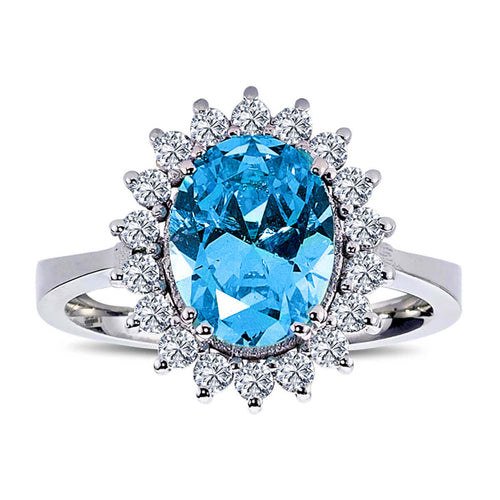
Blue topaz is one of the most popular varieties of topaz and typically occurs in hues ranging from vibrant sky blue to deep bluish hues. Blue topaz rarely occurs in nature in intense color; most natural blue topaz is a rather pale, pale blue. This is because topaz's blue color is generally caused by color centers within its crystal structure, and natural radiation levels typically produce only a faint color center. For example, in some granitic environments, natural underground radiation (from the decay of elements such as uranium and thorium) can produce a slightly bluish hue in topaz.
The majority of blue topaz available today is treated topaz. The starting material is usually colorless or pale topaz, which is subjected to controlled irradiation in a laboratory setting. Thanks to this technique, developed since the 1970s, millions of carats of colorless topaz have been transformed into a brilliant blue color and introduced to the jewelry market ( Altering the Color of Topaz ). Gamma rays, electron beams, or neutron radiation are commonly used in the production of treated blue topaz. The irradiation process creates color centers within the topaz crystal; for example, when a fluorine atom is dislodged from its place in the crystal structure, an electron is trapped in the vacancy (called an F-center). This defect absorbs certain wavelengths of light, causing the stone to appear blue. Irradiated topaz may initially appear dark brown or greenish; the desired blue hue is achieved through controlled heat treatment.
Different names are used commercially for treated blue topaz. "Sky blue" or "Swiss blue" generally describes lighter, brighter blues, while "London blue" refers to darker, deep blues with a slight grayish tinge. These different hues are related to the type and dose of radiation applied. For example, irradiation with linear electron accelerators generally produces a bright blue (Swiss blue), while neutron irradiation in a nuclear reactor can produce darker hues (London blue)—though the stones may need to be aged for weeks after reactor irradiation to prevent them from becoming radioactive. Modern processing techniques are so advanced that the color of treated blue topaz can often be more intense and profound than that of naturally occurring blue topaz ( Altering the Color of Topaz ).
From a scientific perspective, the blue topaz specimen represents a striking achievement in the modification of mineral colors through human intervention . Vivid blue topaz, rare in nature, has become abundant and affordable thanks to these technologies. Treated blue topaz has a remarkably stable color to light and everyday use; laboratory tests show that this color does not fade in normal light ( Altering the Color of Topaz ). However, it has been observed that the blue color disappears at temperatures above approximately 500°C, meaning the color centers are thermally discharged ( Altering the Color of Topaz ). Therefore, caution is required when soldering or exposing jewelry to high temperatures.
In summary, blue topaz can be examined from two perspectives: Natural blue topaz is very rare and pale in color, while treated blue topaz is one of today's most common gemstones, attracting considerable attention for its vibrant blue color. In both cases, the color originates from the color centers within the topaz's structure. With the proliferation of blue topaz, large blue gems, once only available to the very wealthy, are now widely available—a reflection of topaz's scientific advancement in economics and society.
Pink Topaz
Pink topaz is a rare and striking type of topaz with a striking pink hue. Natural pink topaz is highly valuable and typically comes from limited geographic sources. The most famous pink topaz deposits are in the Ouro Preto region of Minas Gerais, Brazil. Some orange/imperial topaz specimens mined in this region have a near-pink hue and can be fully pinked with gentle heating. Natural pink topaz crystals have also been discovered in the Katlang region of Pakistan and are available for the jewelry market.
The scientific reason for the color of pink topaz is the presence of the element chromium . Spectroscopic analysis has revealed that trace amounts of Cr³⁺ (chromium+3) ions replace aluminum in pink (and red) topaz, and this is the source of the color (Pink Topaz Fluorescence - #20 by Thelvin - IGS Forums ). Chromium is also responsible for the vibrant colors in gemstones such as ruby (red corundum) and emerald (green beryl). Within topaz, Cr³⁺ absorbs specific wavelengths of light, reflecting a pink-red hue. The chromium-induced color is quite stable in topaz; it does not fade in sunlight and is more resistant to heat than other colors ( Altering the Color of Topaz ). This allows pink topaz to retain its color in jewelry for many years.
Because natural pink topaz is rare, some pink topaz is produced commercially through processing. The most common method is to heat orange or brown-toned topaz to pink it over controlled heat. Brazilian imperial topaz, in particular, can develop a beautiful pink hue when heated to around 450°C. This process slightly alters the balance of chromophore centers within the stone, reducing the orange component and predominating the pink. Furthermore, some colorless topazes are known to be coated with a thin film, creating "pink-coated topaz," but this coating can wear off over time, making it less preferred.
Pink topaz is often pleochroic : its color may vary slightly when viewed from different axes of the crystal (for example, it may appear more pinkish from one side and slightly orange from the other). This is due to the differential absorption of chromium ions within the topaz along optical axes. Polarized light experiments on thin slices have confirmed that pink topaz can exhibit significant pleochroism.
Because of its value and rarity, pink topaz is often sought after by collectors and for special jewelry creations. The vibrant pink stones known as "Brazilian Pink Topaz" are particularly famous. Scientifically, pink topaz clearly demonstrates the influence of transition metal impurities on mineral colors . The presence of chromium inclusions can be detected spectroscopically, making it possible to determine whether a pink topaz is genuine or heat-treated (since the pink color of pure chromium inclusions does not change with light or heat, while pink hues resulting from defects can). Consequently, pink topaz is an exceptional type of topaz, possessing both high aesthetic value and scientific significance.
Imperial Topaz
Imperial topaz is one of the most valuable and sought-after varieties of topaz. It takes its name from the fascination of Russian tsars with this particular type in the 19th century – according to legend, the pink-orange topaz extracted from the Ural Mountains in Russia was reserved exclusively for the tsar and his family, and was known as "emperor's topaz." Today, the term imperial topaz is primarily used to describe topazes with rich orange, champagne, peach, pink, or reddish hues. Bright orange-red topazes with pink undertones are particularly well-known in this class.
The primary source of imperial topaz is Brazil. Ouro Preto and surrounding mines in the state of Minas Gerais have produced some of the world's most valuable imperial topaz crystals. These stones are typically found secondary within a brown host rock (quartzite or clayschist); the topaz crystals formed in pegmatitic veins within this rock in the past and were then eroded and transported to nearby gravel beds. Ouro Preto topaz typically appears deep yellow-orange in the rough, but can exhibit subtle pink glimmers in the light. This dual-color effect is caused by pleochroism : when viewed from different angles, imperial topaz crystals appear more reddish/pink on one axis and yellowish-orange on the other. This optical property gives the stone a color-changing appearance as it is moved, a unique effect that makes imperial topaz unique.
The color of imperial topaz, just like pink topaz, is due to the element chromium . The impurity Cr³⁺ in its structure gives topaz an orange-pink color ( Topaz Colors: Colors of Topaz and Causes - Geology In ). While the chromium concentration and distribution determine the shade of the color, it has sometimes been suggested that a very slight addition of manganese (Mn) within the mineral enhances the pink tones ( Topaz Colors: Colors of Topaz and Causes - Geology In ). Because the color from chromium is extremely stable, imperial topaz is lightfast and its color does not fade over time. However, some Ouro Preto topaz is relatively brown when mined, but after some time in sunlight (or warm heat), it acquires its characteristic vibrant orange-pink color. This may be the result of UV breakdown of a weak color center that may be present within the stone; Since the stone already has a pink-orange color thanks to the chrome, its true color is revealed when the brown shade disappears.
Due to its historical and aesthetic significance, imperial topaz is home to many legends and stories. Historical imperial topaz, particularly from Russia, was a stunning pink-orange specimen that reached enormous size. Today, the largest quality imperial topazes come from Brazil. These stones, typically certified as pink topazes over one carat, fetch high prices at jewelry fairs.
The scientific significance of imperial topaz stems from its ability to exhibit one of the most vibrant and complex color combinations possible within a single mineral species. An imperial topaz crystal can exhibit both the pink/red hues brought by chromium impurities and the golden yellow hues imparted by color centers . In this case, the stone acts as a natural laboratory, demonstrating the combined effects of transition elements and crystal defects on color. Spectroscopic analysis can reveal both the typical chromium absorption bands and the bands associated with color centers in imperial topaz ( Altering the Color of Topaz ). This provides clues about the formation history of these stones: for example, whether an imperial topaz has been exposed to natural radiation in the past can be determined by the presence of color centers.
Consequently, imperial topaz is the "royal" member of the topaz family. It is considered the most valuable type of topaz due to both its captivating color and its rarity. It is also a stone deeply studied in mineralogy and gemology, with topics such as color formation, pleochroism, and the effects of impurities.
Green Topaz
Green topaz is one of the rarest naturally occurring forms of topaz. It is extremely rare for topaz to occur in the wild with a distinct green color; most stones sold as "green topaz" are actually either a very light bluish-green hue or have been treated. Because topaz typically lacks elements such as chromium or iron, which can impart a green color, green hues are usually the result of color centers . For example, some irradiated topaz can take on a greenish intermediate color (such as a mixture of blue and yellow components) if not properly heat-treated.
Reports of natural green topaz mostly concern topaz crystals with a light leaf green hue. Such specimens have been reported occasionally from some pegmatites in Brazil and Nigeria. The color is usually quite pale and appears green under certain lighting conditions. These stones likely contain color centers generated by natural gamma rays. However, fading of color has also been noted with prolonged exposure to sunlight, suggesting that the color center is unstable.
Most stones sold commercially under the name "green topaz" are treated . Some manufacturers have achieved deep bluish-green hues by gently heating colorless topaz in a nuclear reactor after neutron irradiation. The resulting color is generally darker, with a greenish tinge, than "London Blue" topaz, but technically it is considered a greenish-blue, not a true green. However, the name "green" may still be used for marketing purposes. Another commercial product is coated green topaz : a nanometer-thick metallic film is applied to the surface of colorless topaz. This film reflects some light, causing the stone to appear green (or other) colors. For example, coated topazes called "Mystic topaz" often exhibit rainbow colors, often with a predominance of green and purple ( Topaz Symbolism and Legends - International Gem Society ). While not a true green topaz, it is worth noting that it does produce multicolored effects.
Scientifically, green topaz is an example of how a mineral can appear green without any specific elemental impurities (a color based entirely on defects). This phenomenon is related to electron traps in the crystal lattice absorbing light at different energy levels. Spectroscopic analysis of green topaz typically reveals a broad absorption band similar to blue topaz, but the band position and intensity are such that the stone appears green. This difference is likely due to a combination of multiple types of defects (both electron and hole centers).
As a result, green topaz is one of the rarest types of topaz, most often obtained through unnatural means. Natural specimens, however, are highly collectible. Gemological tests are essential to determine whether green topaz is genuine or treated (for example, if it has a surface coating, a scratch test can reveal it; if it has turned green through irradiation, radioactivity measurements can be performed). Green topaz is perhaps the least known facet of topaz, but its existence demonstrates the wide range of color variations this mineral can exhibit.
Red Topaz
Red topaz is the rarest and most valuable color variation of topaz. Topaz often referred to as "red" is actually the darkest pink-red specimens of the imperial topaz group. A truly blood-red topaz is extremely rare; most red topaz specimens are reddish with a strong orange or pink undertone. However, a few true red topaz discoveries are reported in the literature—notably small crystals found in Brazil and some collectors' specimens that are close to pure red.
The color of red topaz is the same as that of pink and imperial topaz: chromium impurities . A higher concentration of Cr³⁺ ions within the stone creates wider and stronger bands in the absorption spectrum, shifting the color from pink to red ( Topaz Colors: Colors of Topaz and Causes - Geology In ). In some cases, when manganese and chromium are present together, the color can be even darker, or the hue can shift slightly to purple (violet-red) ( Topaz Colors: Colors of Topaz and Causes - Geology In ). Although rare, purplish-red (wine-colored) topazes have been reported in the literature; these are likely the result of additions of other metal ions (e.g., Mn or perhaps Fe) along with chromium.
Red topaz is usually small in size. It's difficult to see a uniform red color in large topaz crystals because the color tends to be zoned within the same crystal. For example, a crystal's tip may be reddish while its base may be orange. This is again due to pleochroism and the distribution of impurities. When cutting, master gemologists take care to facet the stone at the appropriate angle to maximize the color of red topaz; the goal is to ensure the most intense red appears in the direction facing the viewer.
Due to the value of red topaz, unfortunately, imitations sometimes appear on the market. There have been cases where colorless topaz has been coated with a red coating and sold as "red topaz." These coated stones can be distinguished from genuine stones only by careful inspection or microscopic examination (where color accumulation or scratching at the facet edges can reveal a colorless base underneath). Genuine red topaz, however, retains its color throughout its interior.
Scientifically, red topaz can be thought of as topaz at its most saturated color with transition elements . This is essentially an "overdose" in terms of chromium concentration, resulting in very distinct features in the absorption spectrum. For example, in spectroscopy, red topaz has strong bands indicating that it absorbs heavily in the green region and is transmissible in the red region—this gives it its red appearance. Color centers play almost no role in red topaz, as almost all of its color comes from elemental doping. Therefore, its color remains virtually unchanged, whether in ultraviolet light or under heating.
In conclusion, red topaz is one of the rarest gems in the topaz family. With its unique color and brilliance, it rivals ruby in beauty under the right lighting. It is considered both a collector's item and an investment stone. Scientifically, it demonstrates how a mineral can acquire striking color with the help of trace elements.
Brown Topaz
Brown topaz is one of the natural forms of topaz, ranging from light honey-colored, champagne-toned tones to deep brown. Many topaz crystals, especially when freshly mined from igneous rock, appear brown or yellowish-brown at first glance. This color is often due to color centers and defects . Centers formed within the topaz due to natural radiation can give the stone a brown tone reminiscent of smoky quartz.
An interesting characteristic of brown topaz is that its color can change when heated or exposed to sunlight for extended periods. Some brown topazes lighten or even become completely colorless ( Altering the Color of Topaz ) when heated slightly (between 200-400°C). This suggests that the color is due to an unstable defect. Indeed, a study published in the journal Gems & Gemology noted that while most brown and yellow topazes fade in light, some are more stable ( Altering the Color of Topaz ). For example, some brown-yellow stones, called golden topaz, fade over time in room light, becoming almost colorless; this type of topaz was also called "iridescent topaz" in the past, because its color seems to fade away.
On the other hand, some brown topaz can transform into a completely different color when heated. Certain brown topazes, particularly those from Brazil, can be transformed into pink tones through controlled heating. Rough stones from the Ouro Preto region, which have a "dirty pink" appearance, can be transformed into vibrant pink imperial topaz through heat treatment. This process destroys the underlying color centers of the brown color and reveals the chromium impurities already present in the stone. In this way, brown topaz functions as a color reserve ; with the correct treatment, its inner beauty can be revealed.
Many of the largest topaz crystals found in nature are brown or yellowish in color. For example, the massive topaz crystals (weighing many kilograms) on display at the Smithsonian Institution in the United States are often described as champagne-colored. These large crystals are generally valued as mineral collectors' items rather than jewelry, as they may contain fractures and zones of color.
Scientific study of brown topaz, particularly through thermoluminescence and spectroscopic methods, has contributed to the understanding of its color centers. Topaz that loses color when heated can recover its color when cooled and re-irradiated; this cycle is used to study the behavior of defects in topaz. Methods such as electron spin resonance (ESR/EPR) identify paramagnetic centers in brown topaz and analyze their structure. The results generally imply that defects such as electrons trapped in F-ion vacancies (F-centers) or positive hole centers trapped in oxygen vacancies contribute to the brown color.
In summary, while brown topaz may be the most modest form of topaz, its potential for color diversity and transformation are scientifically intriguing. These plain-looking crystals, extracted from the earth by nature, can be transformed into magnificent pink or blue gems with a little human intervention. In this respect, brown topaz represents topaz in its "raw state" and the hidden secrets of its unprocessed form.
Rare and Multicolored Topazes
The extremes of topaz's color spectrum and its special characteristics can also be examined as a separate category. Rare topazes include purple or violet topaz. Normally, topaz has no purple hues, but some pink-red topazes can appear purplish when they contain high levels of chromium or are perceived as having a specific hue by light refraction. Furthermore, the reported "blue-violet" topazes are actually crystals with two color zones: some blue, others colorless, which can give a lavender-toned appearance when combined. Such stones are highly collectible and a source of curiosity.
Multicolored topaz refers to specimens that exhibit multiple distinct areas of color on a single topaz crystal or that may appear multicolored through optical effects. Naturally, topaz crystals can exhibit color zoning ; for example, the tip of a crystal may be one color and the base a different color. This is often due to changing chemical and radiation conditions during the crystal's growth process. For example, some large crystals found in Brazil have colorless cores and blue exteriors—possibly due to increased environmental radiation as the crystal grew. When such a crystal is cut, a stone exhibiting two colors can be obtained.
Another concept that comes to mind when talking about multicolored topaz is pleochroism, a color-changing topaz. Imperial topaz, in particular, appears pink on one axis and yellow on the other, reflecting different colors when rotated. This allows the stone to present a multicolored appearance, even though it's not a single pigment.
Multicolored topazes, obtained through both commercial and artificial methods, are also quite popular. Mystic topaz is one of the most popular. Mystic topaz is produced by coating a thin, titanium-based film onto the surface of colorless topaz. This film creates a rainbow of colors on the stone through the interference of light. Mystic topazes typically have a lustrous appearance, displaying a combination of green, purple, pink, and gold hues ( Topaz Symbolism and Legends - International Gem Society ). When these stones were introduced to the market in the 1990s, they attracted considerable attention, earning them names such as "aurora topaz" or "Caribbean topaz." Azotic topaz, produced with another coating technique, is a multicolored topaz that similarly exhibits vibrant orange, pink, and green shimmers (Azotic is the name of the coating company applied). While these coated stones are genuine topaz, their colors are artificial; however , they are generally durable and the coating does not easily wear off with normal use.
Rare topazes also include varieties that exhibit optical phenomena such as star topaz or cat's eye topaz . Very rarely, topaz can exhibit star-shaped reflections (asterism) or a cat's eye effect (chatoyancy) when internal inclusions align in a specific direction. This is unusual for topaz but can occur as a result of fibrous minerals growing within tiny cavities.
All these rare and multicolored specimens demonstrate that topaz is open to surprises beyond its familiar yellow-blue-pink triad. Both natural geological processes and man-made techniques have expanded topaz's vibrant world. Consequently, topaz holds a special place in mineralogy and gemology as one of the most diverse minerals.
Formation Mechanisms of Topaz Stone Colors and Optical Properties
The scientific mechanisms underlying the diverse colors of topaz are of interest from a mineralogy and materials science perspective. Generally, the color formation in topaz can be divided into two main categories: chemical impurities (impurities) and crystal defects (color centers) . Furthermore, topaz's optical properties (e.g., pleochroism and refractive indices) are also affected by these factors in its crystal structure.
1. Chemical Impurities (Impurities): The introduction of small amounts of foreign elements into the crystal lattice of topaz can dramatically alter the color of the stone. For example, chromium (Cr³⁺) ions create the pink, red, and purplish hues in topaz ( Topaz Colors: Colors of Topaz and Causes - Geology In ). Chromium replaces aluminum and absorbs different wavelengths in the crystal field, which creates the visible color. It is scientifically established that chromium is the primary cause of the colors in pink and imperial topaz ( Altering the Color of Topaz ). Similarly, some studies have indicated that manganese (Mn²⁺) may also affect the nuances of pink-red tones and may contribute to red topaz ( Topaz Colors: Colors of Topaz and Causes - Geology In ). However, manganese's role is not as pronounced as chromium. While elements such as iron (Fe) also impart color to many minerals, iron's role in topaz is more limited; It is sometimes suggested that it contributes to very pale yellow tones, but it is not a strong influence.
The color-producing mechanism of chemical impurities is based on the principle that, at the atomic level, electrons absorb specific energy levels. In chrome topaz, Cr³⁺ ions absorb light in the green-yellow region and emit light in the red-pink region, making the stone appear pink. If the impurity ion concentration increases, the absorption becomes stronger and the color becomes more saturated (for example, dark red instead of light pink). Chromium topazes, when examined spectrally , exhibit the characteristic absorption bands of Cr³⁺ ( Altering the Color of Topaz ). These bands are similar to the bands of the same chromium ion in other gemstones, such as ruby and spinel, demonstrating that chromium is a universal "colorant."
2. Crystal Defects (Color Centers): Many colors of topaz, especially its blue, yellow, and brown hues, are created by structural imperfections known as color centers ( Pink Topaz Fluorescence - #20 by Thelvin - IGS Forums ). Color centers are anomalies in the crystal structure associated with missing or excess charge carriers. For example, the removal of a fluorine atom from the crystal lattice and the trapping of an electron in its place creates a color center called an F-center. This center absorbs light of a specific wavelength, changing the apparent color of the stone. In blue topaz, such an electron trap (or, conversely, a cation vacancy and a positive "hole") is often present. Almost all naturally occurring blue, yellow, or brown topazes are caused by these types of imperfections ( Pink Topaz Fluorescence - #20 by Thelvin - IGS Forums ). In fact, it could be said that most topaz colors, with the exception of the pink/purple hues caused by chromium, are due to color centers .
Color centers can be induced by radiation. Natural radiation emitted by uranium-bearing minerals underground can create these defects in neighboring topaz crystals. In the laboratory, such defects can be introduced into topaz using X-rays, gamma rays, electron beams, or neutrons. For example, colorless topaz can turn blue when high-energy electrons dislodge atoms within the structure. These defects can often be thermally unstable . When topaz, which has turned blue by radiation, is heated, the trapped electrons recombine, removing the defect and the color disappearing (much like blue topaz losing its color at 500°C). Some yellow topaz also fades under UV light from the sun because UV releases electrons from the defect or creates new defects.
The presence of color centers can be detected by spectroscopy. They typically produce broad, non-descript absorption bands. For example, a broad band in the optical absorption spectrum of blue topaz indicates an electron trap. Electron paramagnetic resonance (EPR) techniques are also used to understand the nature of color centers; when blue topaz is examined in an EPR instrument, the magnetic signature of isolated electrons in the crystal can be detected. Studies have identified the EPR signals of both natural and artificially irradiated blue topaz, confirming that these are electrons trapped in fluorine vacancies.
Pleochroism and Optical Behavior: Topaz is a birefringent mineral and has three distinct refractive indices (α, β, and γ). Therefore, topaz with particularly strong colors behaves pleochroically ; that is, it can exhibit different color intensities when viewed from different crystal axes. Pink/red topaz containing chromium is an example of a crystal in which pleochroism is prominent – these stones can appear pink along the X-axis and yellowish along the Y-axis. Pleochroism is generally weaker in blue topaz because the color center is similar in all directions; however, pleochroic differences between a slightly gray-blue and a green-blue have been reported in very dark London Blue topaz.
Another optical property of topaz is its dispersion . Topaz's dispersion, or its ability to separate white light into colors in a prism, is low compared to gems like diamond (approximately 0.014). Therefore, topaz doesn't appear as "fiery" (rainbow-like) as diamond. However, its clarity and high refractive index make it a highly brilliant gemstone. Topaz's ability to refract and reflect light is used in faceted cuts to maximize reflection.
To summarize: Colorless topaz is the state that occurs in the absence of any coloring agents. Pink/red hues are created by chemical impurities (especially Cr) and are quite stable ( Altering the Color of Topaz ). Blue, yellow, and brown hues are largely due to color centers (defects), and some can be unstable by light or heat ( Altering the Color of Topaz ). Green and intermediate hues are often the result of a combination of these defects or the interaction of defects and impurities. The optical behavior of topaz is influenced by these intrinsic factors, enabling phenomena such as pleochroism. For scientists, these properties make topaz valuable both as a natural color laboratory and as an application material for jewelry technologies.
Benefits and Uses of Topaz Stone Based on Scientific Research
Topaz has held a significant place in the jewelry world for centuries, and it has also been scientifically studied in various ways. When the benefits of topaz are mentioned, its use as a gemstone is often the first thing that comes to mind. Furthermore, while there are many benefits attributed to topaz in metaphysical or alternative medicine circles, most of these claims lack scientific basis. Below, we discuss the real, evidence-based benefits and uses of topaz:
-
Importance in the Gem and Jewelry Industry: With a hardness of 8, topaz is a durable gemstone and can be easily used in everyday jewelry (rings and bracelets). Only diamond and corundum (ruby, sapphire) are harder than topaz, making it highly resistant to scratches. Topaz, especially those transformed into a blue color through heat treatment, has become very popular in the jewelry market in recent decades because it is available in large sizes and is reasonably priced ( Altering the Color of Topaz ). For example, since the 1980s, hundreds of thousands of carats of blue topaz have been released, and today, rings and necklaces with large blue stones that resemble diamonds are widely available. Topaz is also considered the traditional birthstone for November (especially yellow topaz), which gives it cultural value and increases its demand as a gift. From an economic perspective, topaz mining has become a source of income for local people in countries like Brazil, Nigeria, and Pakistan, and the processed and exported topaz has earned foreign currency for these countries.
-
Industrial and Technological Uses: Topaz's industrial use is limited, but not entirely absent. Its Mohs 8 hardness and chemical resistance mean that high-quality topaz crystals can be ground into a fine powder and used in specialized abrasives (e.g., abrasive powders or emery; historical records refer to "topaz powder"). However, with synthetic abrasives such as corundum or silicon carbide available, using natural topaz for this purpose is uneconomical. The optical purity and UV resistance of topaz crystals have also led to its use in some scientific instruments for testing purposes. For example, in laser research, attempts have been made to create laser environments by doping topaz crystals with various ions; however, it has not become a common laser crystal.
-
Its Role in Geological and Scientific Research: Topaz serves as an indicator mineral for geologists. The presence of topaz in a field can indicate that magma or hydrothermal solutions are fluorine-rich, perhaps indicating the presence of minerals such as tin-tungsten. Indeed, topaz has been observed frequently in greisen alteration zones associated with Sn-W (tin-tungsten) mineralization ( A Case Study from the Sn-W-Li Deposit, Zinnwald/Cínovec ). Furthermore, the presence of topaz provides clues about the temperature and pressure at which the rock formed; laboratory experiments have shown that topaz is stable under certain pressure-temperature conditions. Petrologists suggest that the presence of topaz in metamorphic environments indicates that the rock interacted with fluorinated fluids at high pressure. For example, OH-rich topaz has been synthesized deep below in water- and fluorine-rich environments, providing information about the water-carrying capacity of the Earth's crust ( High-pressure synthesis and properties of OH-rich topaz ). In high-pressure experiments, scientists discovered that topaz can remain stable by increasing its OH content (closer to the theoretical composition of Al₂SiO₄(OH)₂). This finding suggests that topaz may be a water-storing phase in deep geological environments, thus playing a role in water transport to depths.
-
Health and Alternative Medicine Claims: Throughout history, topaz has been associated with various legends and folk beliefs. In the Middle Ages, topaz was believed to give its owner strength and sanity, and to detect poisons; some sources even claimed that wearing a topaz bracelet on the left arm protected against black magic, relieved arthritis pain, and improved digestion ( Topaz Symbolism and Legends - International Gem Society ). The 12th-century mystic St. Hildegard recommended that rubbing a topaz dipped in wine would improve vision ( Topaz Symbolism and Legends - International Gem Society ). However, modern medical and scientific research has found no evidence to support such claims . Topaz's chemical inertness (unreactive) nature makes it virtually impossible for it to have any biochemical effects on the body. For example, while minerals containing copper or selenium may have health benefits by releasing trace elements, topaz, because it is insoluble and does not release active elements, provides no such benefits. Except for the psychological placebo effect, the scientific community does not accept that wearing topaz offers any direct health benefits. Therefore, alternative medical accounts of topaz lack scientific basis and are more likely to carry mythological or spiritual meanings. This is also true for many other gemstones; beliefs about the metaphysical powers of crystals are cultural, and research has not confirmed them.
-
Scientific Educational and Collectible Value: Topaz is also used as a valuable specimen in geology and mineralogy education. In university geology departments, topaz crystals are displayed to teach students about crystal systems, hardness scales, and pleochroism. For mineral collectors, topaz is an attractive object, both aesthetically pleasing and diverse in its forms. Ongoing scientific research involves microanalyzing topaz to examine its fluid inclusions, providing insights into geochemical conditions millions of years ago. For example, examining the fluid inclusions within topaz provides clues about the temperature, pressure, and chemical composition of the environment in which the crystal formed. In this way, topaz is not only a gemstone but also a record of Earth's geological history .
Advanced Analysis Techniques and Laboratory Synthesis
Scientific studies on topaz utilize advanced analytical techniques to understand the mineral's structure and properties. Spectroscopy , microscopic examination , and synthetic experiments are important tools in unraveling the mysteries of topaz:
-
X-Ray Diffraction (XRD): The crystal structure of topaz has been determined in detail through XRD analysis. Orthorhombic cell parameters and atomic arrangement have been established in diffraction studies conducted since the early 20th century. These analyses demonstrate the symmetrical and robust nature of topaz's internal structure. XRD is also used to compare the structures of natural topaz with those of laboratory-grown topaz, confirming that natural and synthetic topaz are structurally identical, thus maintaining the correct formula.
-
Scanning Electron Microscope (SEM) and EDS: Because topaz is an insulating mineral, a conductive coating is applied to it during SEM examination ( Topaz ). When fractured topaz surfaces are examined under SEM, characteristic conchoidal (clamshell-like) fracture patterns and planar cleavage surfaces are observed ( Topaz ). Energy Dispersive X-ray Spectrometry (EDS) integrated with the SEM is used to confirm the elemental composition of topaz ( Topaz ). EDS analysis has shown that topaz primarily contains the elements Al, Si, O, and F, with no other significant elements (signals seen due to the gold coating are removed by software) ( Topaz ). This confirms the purity of the topaz's chemical formula. Small impurities detected by EDS (e.g., Fe or Cr peaks) can help explain the color of a given sample.
-
Fourier Transform Infrared Spectroscopy (FTIR): IR spectroscopy plays a critical role in understanding the OH-to-F ratio in topaz. Infrared light reveals the vibrations of the chemical bonds within topaz. In FTIR analysis, a distinct band is observed for topaz around ~3650 cm⁻¹; this band corresponds to the OH stretching vibration of the trapped hydroxyl groups ( Topaz ). Fluorine content is revealed by sharp peaks around 1160 cm⁻¹ and 1006 cm⁻¹ – these peaks arise from the vibrations of the Si-OF and Al-OF bonds, indicating the presence of fluorine ( Topaz ). Interestingly, this 3650 cm⁻¹ band appears in natural topaz, which contains some OH, rather than in fully fluorinated ideal topaz (Al₂SiO₄F₂), indicating that most naturally occurring topaz contains some OH. FTIR also studies the behavior of topaz upon heating; experiments have reported that the OH band splits into two as the temperature decreases, with four distinct OH bands visible at temperatures as low as -190°C. These studies indicate that the OH localization within topaz is complex and that the different OH sites can be separated at low temperatures.
-
Raman Spectroscopy: Topaz exhibits strong and sharp lines in Raman spectroscopy ( Topaz ). Peaks around 1000 cm⁻¹ correspond to Si-O vibrations, while bands of crystal lattice modes are found in the region below 500 cm⁻¹ ( Topaz ). Raman analysis is used to distinguish topaz from other similar-looking minerals (e.g., beryl or quartz); each mineral has a unique "Raman fingerprint," and topaz's is also distinctive. In gemological analysis, a rapid Raman test can be performed to determine whether a suspected stone is topaz. Inclusions (liquid or solid inclusions) within topaz can also be analyzed with a Raman microscope.
-
Optical Spectroscopy (UV-Vis): Ultraviolet-visible absorption spectroscopy is used to understand the color formation of topaz. Differently colored topaz samples are examined according to the wavelengths they absorb. For example, the absorption spectrum of blue topaz exhibits a broad band around 620 nm (in the orange-red region), which causes the stone to appear blue (it transmits blue light due to absorption in that band). Pink topaz, on the other hand, absorbs strongly around 500-550 nm (in the green region), resulting in a pink-red color. This type of spectroscopic data provides direct evidence of laboratory-produced color centers. It can also be used to distinguish between natural and artificially colored topaz: Some artificially irradiated topaz contains weak bands at certain wavelengths that differ from those of natural topaz, which can be distinguished by experts.
-
Electron Paramagnetic Resonance (EPR): Another advanced method for detecting the presence of color centers is EPR analysis. Irradiated blue topaz, in particular, produces distinct EPR signals measurable at room temperature. These signals arise from the resonance of free electrons trapped in the crystal structure under a magnetic field. EPR studies can quantitatively determine the structure and density of F-centers in blue topaz. This method can even be used to determine the coloration of a blue topaz by comparing the signatures of blue topaz produced with different irradiation techniques (gamma, electron, or neutron).
-
Laboratory Synthesis: The synthetic synthesis of topaz has been a topic of interest for scientists. Although there is no need for commercial production of synthetic topaz due to its abundance in nature, experimental petrologists have attempted to recreate its formation in the laboratory. One of the first successful synthetic attempts was performed by Rosenberg in 1912; crystals with a composition similar to that of topaz were obtained in a system containing fluorine and aluminum ( [PDF] Synthesis, stability, and properties of AlrSiO4(OH)r - RRuff ). This early work provided evidence that topaz could be produced in the laboratory. More recently, OH-rich topaz has been synthesized through high-pressure and temperature experiments ( High-pressure synthesis and properties of OH-rich topaz ). For example, at pressures exceeding 1 GPa and at ~700°C, theoretical topaz, consisting entirely of OH (topaz-OH), was successfully crystallized. Studying these synthetic samples has enabled us to understand the location and effects of the OH group in the topaz structure. It has been found that topaz with higher OH content exhibits little difference in physical properties, such as refractive index and density, compared to fluorinated topaz. This suggests that the diversity of topaz observed in nature (e.g., different density or optical properties) may be due to the OH-F ratio.
-
Synthesis and Stability Studies: Laboratory syntheses also reveal the stability range of topaz. Experiments have shown that topaz becomes unstable and dissolves at temperatures above approximately 750°C and at low pressure. However, it can withstand higher temperatures at higher pressures. This finding confirms the conditions under which topaz can form/exist in geology. Furthermore, the melting point and decomposition reactions of topaz (e.g., its decomposition into mullite and corundum) have been experimentally investigated. This demonstrates that topaz will disappear if topaz-bearing rocks reach certain conditions during metamorphism, an important indicator for metamorphic petrologists.
-
Distinguishing Between Natural and Synthetic: Advanced analytical techniques are also used to determine whether commercially available topaz is natural, laboratory-produced, or treated. For example, while the distinction between fully synthetic and synthetic topaz is often not a concern because it is not synthetically produced, identifying coated or irradiated stones is important. Coated mystic topaz exhibits characteristic thin-film interference patterns and scratches on its surface. Irradiated blue topaz can sometimes carry faint traces of radioactivity; therefore, radiation levels are measured as a certification requirement for imported blue topaz in many countries. Spectroscopic research is also ongoing to distinguish between irradiated and natural blue stones. For example, thermoluminescence testing can determine whether a topaz has been exposed to radiation in the past (an irradiated topaz can emit light when heated).
As a result, advanced analytical techniques and laboratory studies are illuminating every aspect of topaz , from the atomic level to its macroscopic properties . This technical knowledge is valuable not only for academic curiosity but also in a variety of practical fields, from counterfeit detection and mineral exploration to jewelry processing and materials science. Each in-depth study of topaz further clarifies the truth behind this beautiful stone and enriches its scientific journey.
Source
-
Mindat.org – Topaz mineral information page ( Topaz: Mineral information, data and localities. ) (about the formation and chemical structure of topaz)
-
McCrone Research Institute – Topaz microscopic examination article ( Topaz ) ( Topaz ) (physical, optical and spectroscopic properties of topaz)
-
Nassau, K. (1985). “Altering the Color of Topaz.” Gems & Gemology , 21 (1), 26-34 (Scientific study on the changing colors of topaz and the causes of colors)
-
GeologyIn.com – Topaz Colors and Causes article ( Topaz Colors: Colors of Topaz and Causes - Geology In ) ( Pink Topaz Fluorescence - #20 by Thelvin - IGS Forums ) (summary of topaz color variations and their causes; highlights the role of chromium and color centers)
-
International Gem Society – Topaz Symbolism and Legends article (Topaz Symbolism and Legends - International Gem Society ) (historical beliefs, legends and modern classifications of topaz; also touches on alternative medicine claims)
-
Wunder, B. et al. (1999). "Synthesis, stability, and properties of Al₂SiO₄(OH)₂" ( High-pressure synthesis and properties of OH-rich topaz ) (Academic study on laboratory synthesis and structural properties of topaz)